
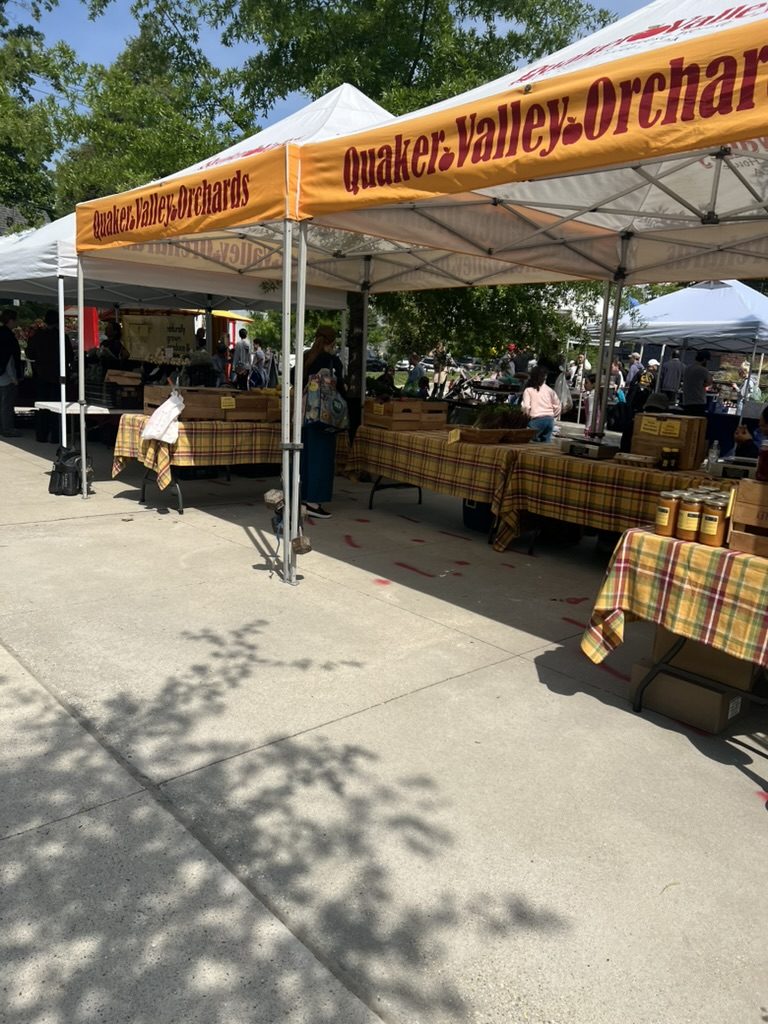
Why food-truck operators pick battery over gas
The three reasons we hear most from operators calling us:
- Fumes next to the food. A gas generator sits within a few feet of the service window. Its exhaust drifts across the prep area, into cold-side ingredients, and toward your customer line. Battery has none of that.
- Noise while you're taking orders. A typical portable gas generator runs 60–75 dB. Battery is rated under 30 dB. Customers can order without repeating themselves; you can hear the ticket printer.
- No refueling in the middle of service. We drop it off charged. It runs the shift. You never touch it, refuel it, or shut it down mid-order.
What we power at food truck events
- Warming trays, chafing setups, heat lamps
- Panini presses, small griddles, blenders
- Espresso machines and coffee equipment
- POS terminal, card reader, receipt printer, ticket printer
- Prep-area lighting, order-window lighting, string lighting
- Fans, phone charging, backup device charging
- Refrigeration and freezers — tell us first, because they cycle all day and we size for them
→ Load numbers by equipment: What size generator do I need
Sizing it to your setup
- A single truck, standard shift — the Full Event package: one inverter with two batteries usually covers a full-day setup with POS, lighting, and moderate warming.
- Heavy warming or refrigeration — more batteries. Anything that holds a temperature for hours is the biggest continuous draw, and it's what pushes you into a larger setup.
- Vendor row or multi-truck event — one drop with the pro-grade distribution box serves several trucks. For a longer row, a second inverter is available as a custom quote. Tell us what's on the row and we'll size it.
We're built for the community-event and mid-size vendor scale. Not the right call for a 50,000-person festival where each truck needs its own high-continuous heavy grill. For that, gas is probably still the right answer — we'll tell you honestly.
Delivered — you never haul a generator
No Home Depot rental counter. No 200-pound generator to get into and out of a vehicle. No gas cans in the truck cab. We deliver it on a cart, position it exactly where you want it, plug in the distribution box, and come back for it after your event. Delivery, setup and pickup are included within 20 miles of Chevy Chase, DC.
Keep the unit out of direct sun and rain — under an awning or the truck itself works.
Food truck power questions
Can one unit run a whole shift?
Usually yes. Tell us your equipment list and shift length and we'll size it. POS and lighting are light loads; refrigeration and warming equipment run all shift, so they're where the energy goes.
What about a fryer or a heavy grill?
Commercial fryers and large flat-tops are heavy continuous heat loads and push past what battery makes sense for. If your operation is heat-heavy end-to-end, gas is probably the honest answer. Send us your equipment list and we'll tell you straight.
Do you deliver to permitted events on the National Mall or in parks?
Yes — we've powered permitted public events on the National Mall. Battery is often the only combustion-free option for NPS and park sites where a gas generator would be restricted or unsafe.
Several trucks in a row — one unit or multiple?
Depends on total draw and how far apart the trucks are. A single distribution box handles several trucks. For a longer row, a second inverter is available as a custom quote. Tell us the layout.
How fast can you get us set up on the day?
We stage the unit before doors open. You'll never be waiting on power to start service.